By Blackmead · Published:
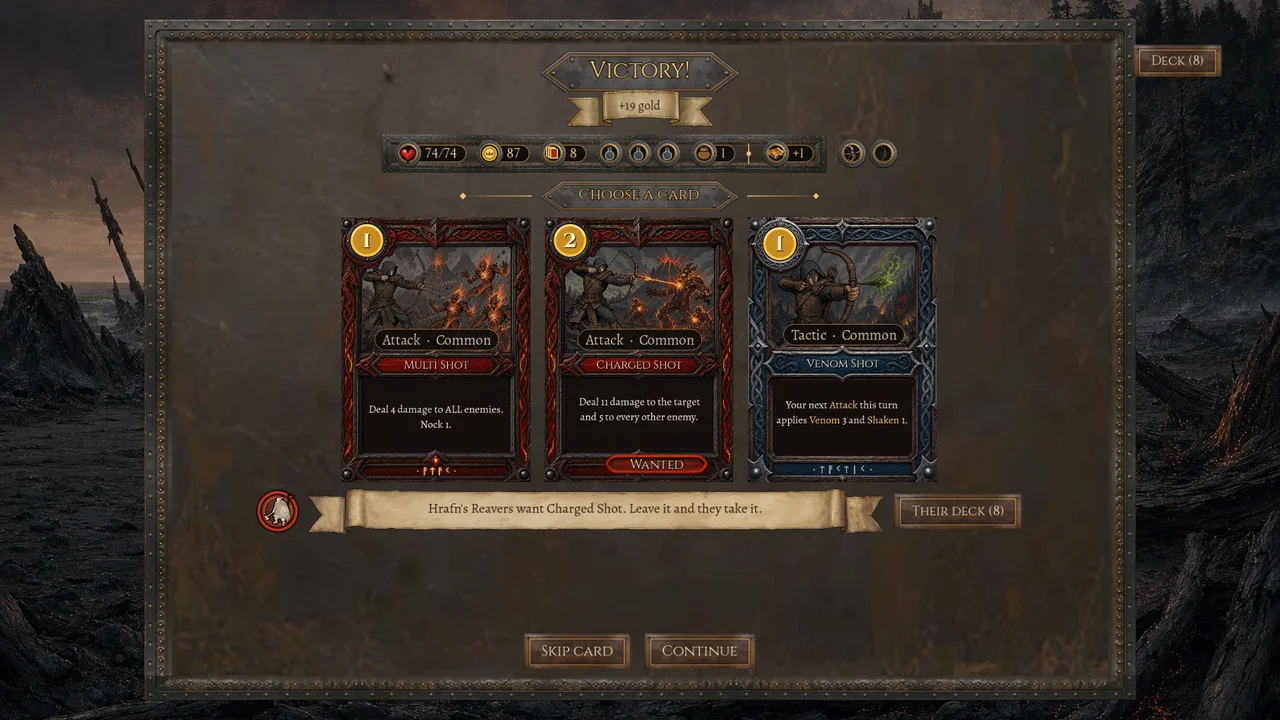
The reward screen has another customer. Your rival warband takes cards you pass over, so building a deck means thinking about the fight on both sides of the table.
Jump to the rival warband chapter at 3:03.
Someone else wants that card
The fight is over. Three cards are waiting. One looks useful, one looks interesting, and one looks like somebody else's problem. In Ascent, somebody else may be delighted with that arrangement.
Each island has a rival warband. It takes cards you leave behind on reward screens and brings them to the chase and the gate. Your deck is growing, and something behind you is growing along with it. That makes the quiet moment after a victory worth a little attention.
Start with the hand you have been playing. What keeps going wrong? Are you struggling to protect yourself, reach an important enemy or finish a fight? A reward that answers a recurring problem has a clear job. An impressive card with no job deserves a second look.
Give the next card a reason to be here
Your hero supplies a starting deck, passive and weapon. A mastery, once unlocked, adds a perk, card swaps and a signature card. Those choices give you a direction before the first reward appears. They do not tell you what every later reward should be.
Try a simple question: what would this card have done in the fight I just finished? Then ask what it might do against the next problem. The Ranger can reach beyond the enemy front row; a party also has protection, healing and damage to coordinate. Think about the work already being done before adding more of the same.
You can pass on an offer. Remember the warband when you do. Taking a card only because you dislike the idea of facing it is a choice with a cost, too: you still have to make it work in your own deck.
The forge is part of deckbuilding
Rewards are only one way to shape the run. The forge lets you upgrade, remove or reforge a card. You can also repair and improve your weapon or carve runes. A Hearth offers choices that include rest, weapon maintenance, card work and a meal.
Look at what needs help before choosing the stop. A card you already rely on may be worth improving. A card you keep wishing were something else may be worth reconsidering. A worn weapon or a battered hero can make a very persuasive argument for attention.
There is no need to arrive with a perfect deck list memorised. Notice which choices help you solve the next fight. Notice which ones keep waiting for a situation that never comes.
Meet your decisions at the gate
When the warband catches up, the reward screens become part of the story. You have been making decisions about what to keep; your rivals have been making use of what remained. The next time you see an offer, you may remember it differently.
Try a run with that in mind. Read the cards, watch what the rivals want and spend a little time at the forge. Then tell us which choice you were happiest with, and which one came back to cause trouble.
The public Windows preview is available without signup. Card values can change while Ascent is in development, so use the text in your current build when planning an exact combination.